In plain words: A new training penalty arranges a model's neurons so nearby ones handle similar jobs, like cells in the brain, and can be added to vision and language models. They kept accuracy while showing brain-like patterns and predicting brain responses better than earlier topographic models.
Abstract · TopoNets: High Performing Vision and Language Models with Brain-Like Topography
Neurons in the brain are organized such that nearby cells tend to share similar functions. AI models lack this organization, and past efforts to introduce topography have often led to trade-offs between topography and task performance. In this work, we present TopoLoss, a new loss function that promotes spatially organized topographic representations in AI models without significantly sacrificing task performance. TopoLoss is highly adaptable and can be seamlessly integrated into the training of leading model architectures. We validate our method on both vision (ResNet-18, ResNet-50, ViT) and language models (GPT-Neo-125M, NanoGPT), collectively TopoNets. TopoNets are the highest-performing supervised topographic models to date, exhibiting brain-like properties such as localized feature processing, lower dimensionality, and increased efficiency. TopoNets also predict responses in the brain and replicate the key topographic signatures observed in the brain's visual and language cortices. Together, this work establishes a robust and generalizable framework for integrating topography into leading model architectures, advancing the development of high-performing models that more closely emulate the computational strategies of the human brain.
Mayukh Deb, Mainak Deb, N. Apurva Ratan Murty
arXiv:2501.16396 · cs.LG, cs.NE, q-bio.NC · submitted Jan 27, 2025
abstract · pdf · html · 10 pages

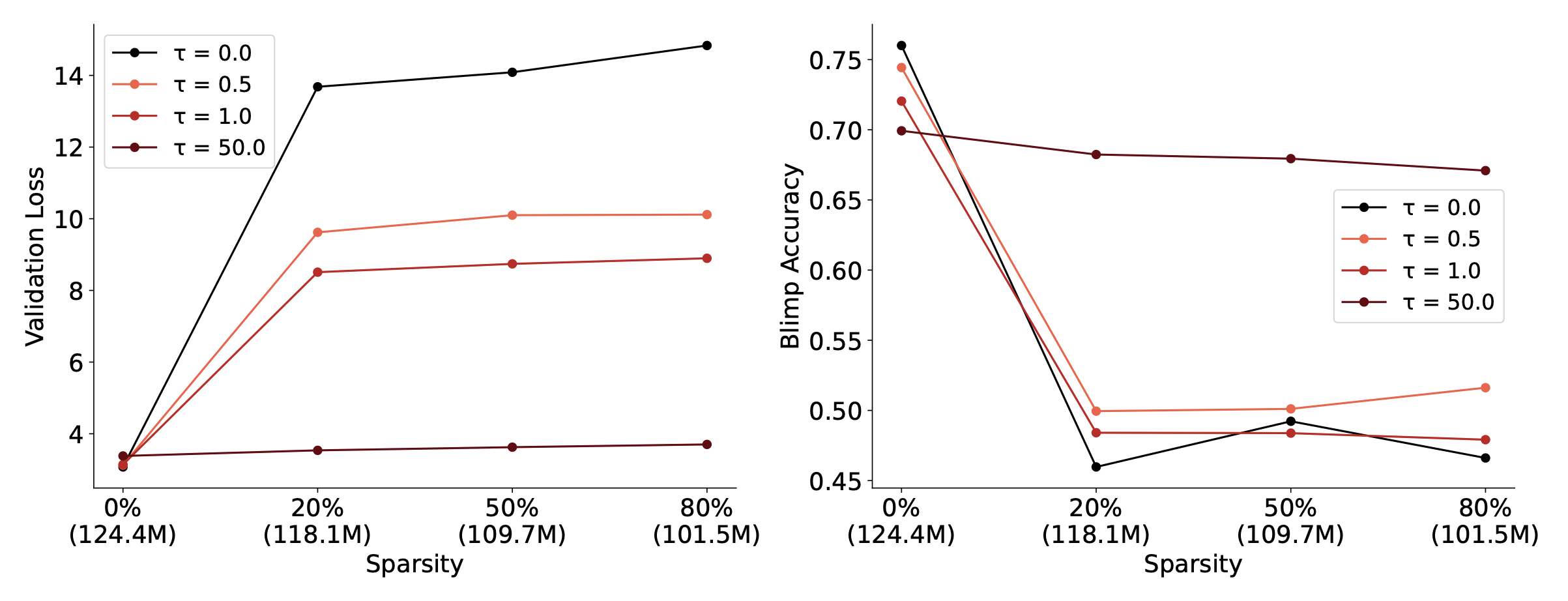
The key insight we discovered was that explicitly enforcing brain-like topographic organization (as some academic work attempts - such as this one here) isn't necessary - what matters is having the right functional components that parallel biological visual processing. Our experience showed that the key elements of biological visual processing - like hierarchical feature extraction and temporal integration - emerge naturally when you build architectures that have to solve real visual tasks.
The brain's organization serves its function, not the other way around. This was validated by the real-world performance of our synthetic visual cortex in the Tesla FSD stack.
Link to the 2021 Tesla AI day talk: https://www.youtube.com/live/j0z4FweCy4M?t=3010s